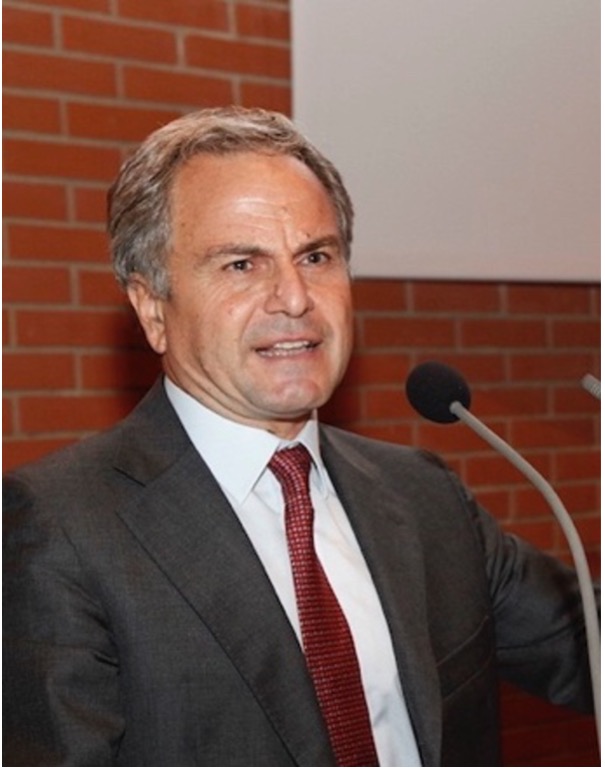
 Piero Salatino
KEYNOTE LECTURE
Circular Strategies to Support Material Sourcing for the Digital Transition
Piero Salatino
University of Naples Federico II, Italy
MedITech Competence Center
ABSTRACT
The digital transition, which has been accelerated by artificial intelligence, relies heavily on increasing the amount of material used in computing hardware, communication networks, electricity infrastructure and energy storage. This talk briefly outlines the critical raw material requirements involved and evaluates circular strategies for reducing the demand for primary resources. The literature reveals two key challenges: the substantial infrastructure demand for copper, and the dependence on smaller quantities of specialty materials, including gallium, germanium, indium, tantalum, and rare earth elements. Vulnerabilities in the supply chain arise from the concentrated sourcing of raw and processed virgin materials, dependence on host metal production, and limited recovery of materials from complex electronic products.
Quantitative studies illustrate the scale and variability of these pressures. A Material Flow Analysis of the relevant raw materials highlights the 'hotspots' of dependable supply chains and the main sources of electronic waste. However, these estimates describe different system boundaries and cannot be combined into a single material demand forecast.
Circular strategies can substantially alter these trajectories. Modelled interventions across the digital equipment lifecycle could substantially reduce electronic waste, while longer device lifetimes and improved hardware utilisation would lower the required allocation of resources. Improvements in manufacturing yield and recovery of production scrap offer additional opportunities. However, end-of-life product collection does not guarantee functional recycling, and waste reduction does not automatically equate to equivalent reductions in primary extraction. The ability to 'close the loop' hinges on the rapidly expanding growth rate of critical raw material demand, driven by the exponential growth in demand for digital services and rapid technological shifts.
The effective implementation of the sustainable utilisation of material resources requires durable, repairable equipment; component reuse; economically viable recovery processes; and transparent material inventories. Future assessments should distinguish between annual flows and accumulated stocks, represent material purity and changing technologies, and account for equipment lifetimes and competing demands. Circularity must therefore become an integral design and planning principle for digital infrastructure, supported by coordinated policies for procurement, manufacturing and resource governance.
SPEAKER BIOGRAPHY
Piero Salatino is Professor of Chemical Engineering and faculty member of the Department of Chemical, Materials and Industrial Production Engineering of the University of Naples Federico II. Chairman of MedITech, Italian Competence Center on Industry 4.0 enabling technologies. Dean of the School of Polytechnic and Basic Sciences of the University of Naples Federico II (2013-2020); Dean of the Engineering Faculty of the University of Naples Federico II (2010-2013); Director of the Combustion Research Institute - National Research Council (2008-2010). President of GRICU (Gruppo di Ingegneria Chimica dell'Università), the Association of Italian University Chemical Engineering Faculties (2023-2025). Appointed by the Italian Ministry of University and Research as member of the Experts Committee for the establishment of the National Research Programme 2021-2027. Piero Salatino is an internationally recognized researcher and scholar in the fields of chemical reactor engineering, powder technology, thermochemical conversion of solid fuels, bioprocess engineering, with a scholarly record of more than 350 scientific articles in international archival journals and more than 400 articles in proceedings of international conferences. Member/past member of the editorial boards of Powder Technology, Fuel Processing Technology, Industrial & Engineering Chemistry Research, Combustion & Flame, Combustion Science and Technology, Scientific Reports, Frontiers in Energy Research. Former President of the Italian section of the Combustion Institute (1997-2005), he is member of the historical Accademia Pontaniana.