SPECIAL SESSION #04
Physical Techniques To Quantify Impacts
ORGANIZED BY
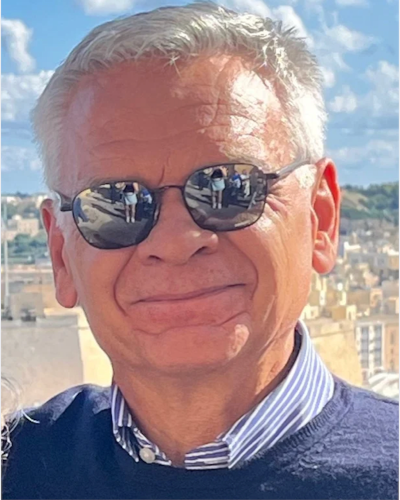 Carlo Sabbarese
Carlo Sabbarese
Department of Mathematics and Physics, University of Campania "Luigi Vanvitelli", Italy
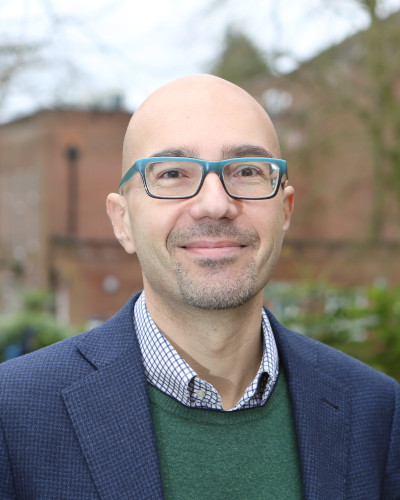 Mauro Rubino
Mauro Rubino
Department of Mathematics and Physics, University of Campania "Luigi Vanvitelli", Italy
SPECIAL SESSION DESCRIPTION
Physical techniques are increasingly being used to quantify the impacts of human activities on the environment. Techniques based on radiation measurement, isotopic analysis, thermo-hygrometric monitoring, are effective tools for tracing the pathways of pollutants, infer their origins, assessing contamination, and analyzing ecosystem dynamics, helping to develop more sustainable production by giving an insight in the process, ensure a clean energy supply, and generate environmental benefits. It is essential that these techniques lead to the adoption of new regulations, which will then form the basis for sustainable policies.
This session aims to connect researchers and professionals using physical techniques to share their experiences and create new collaborations. Contributions presenting experimental and modelling studies, as well as case studies on real world applications are welcome.
TOPICS
Topics of interest include, but are not limited to:
- Isotopes to quantify fossil vs biogenic carbon;
- Agrivoltaics to de-carbonize the energy sector;
- Radioactivity measurements in environmental matrices (air, soil, water, building materials, etc.);
- Indoor and environmental radon measurement methodologies;
- Sustainable approaches to radioactive waste disposal;
- Radioecology and environmental protection.
ABOUT THE ORGANIZERS
Carlo Sabbarese, is a Professor of Applied Physics for Cultural and Environmental Heritage in the Department of Mathematics and Physics at the University of Campania "Luigi Vanvitelli", where he holds various institutional positions. He has promoted interdisciplinary research on environmental issues, using gamma spectroscopy, charged particles and conventional and ultrasensitive mass spectrometry to study the transfer of radionuclides between different environmental compartments and environmental radioactivity. He has also developed various active and passive measurement techniques for radon and thoron. He is also an expert in radiation protection. He has also carried out X-ray fluorescence (XRF) analyses on ancient coins, frescoes, and other historical and artistic artifacts.
Mauro Rubino, i did my BSc and my PhD from 2001 to 2006 at the Second University of Naples, now università della Campania 'Luigi Vanvitelli'. I studied the carbon cycle in soil by means of isotopic methodologies. Specifically, I focused on how to measure the fluxes of carbon involved in the leaf litter decomposition process by measuring the isotopic composition of carbon in soil and leaf litter. In 2007, I moved to Aix en Provence (France) for a 18 month post-doc at INRA (Institut National de la Recherche Agronomique). There, I studied the dynamics of carbon in soil amino acids, measuring the isotopic composition of carbon at the molecular level. At the end of 2008, I was hired by the University of Copenhagen (Niels Bohr Institute, Centre for Ice and Climate) for a 3 year post-doc to study past variations of atmospheric chemical composition in ice cores. I worked on a project in collaboration with the Commonwealth Scientific and Industrial Research Organisation (CSIRO, Australia) and I spent most of my time working in the ICELAB and GASLAB laboratories at CSIRO (Aspendale, Melbourne). I worked on improving the precision of the protocol to extract air from ice cores and measure the concentration of trace gases (CH4, CO2, CO, N2O) and the isotopic composition of CO2. In 2012, I was hired as a Research Scientist at CSIRO for a 1 year period. In 2013 I went back to Università Vanvitelli (Italy). In January 2018, I joined the School of Geography, Geology and the Environment at Keele University as a Lecturer in Environmental Science where I tought environmentally related courses and did research on carbon cycle-climate dynamics. In 2020 I went back to Università Vanvitelli and I have worked on a number of projects, including identification of source of nitrates in groundwater through isotopic analyses of nitrates, dating of wine samples using 14C bomb spike, etc..., but primarily I have focused on paleo-climate related projects, collaborating with my French and Danish-Australian colleagues.