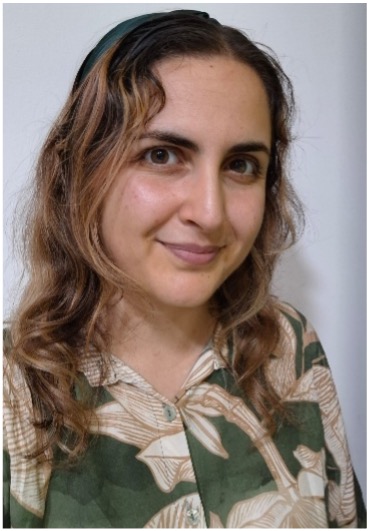
 Chiara Imparato
TUTORIAL
Radioecology for Sustainable Management of Radioactive Materials: Using the ERICA Tool to Support Ecosystem Protection and Safe Resource Reuse
Chiara Imparato
University of Campania Luigi Vanvitelli, Caserta, Italy
ABSTRACT
Sustainable development requires the ability to manage technological activities while ensuring the long-term integrity and resilience of ecosystems. The reuse, recycling, and repurposing of materials containing residual levels of radioactivity may contribute to waste minimization and resource efficiency but, in this context, also the long-term protection of ecosystems from potential radiological impacts must be addressed: protection of ecosystems from ionizing radiation represents an important component of sustainable environmental management.
While, traditionally, radiation protection frameworks focus mainly on human health, there is a growing need to evaluate potential impacts on non-human biota and to support decisions that protect biodiversity. Radioecology provides the scientific basis for evaluating how radionuclides behave in environmental systems, including their transport, accumulation, and potential effects on non-human biota. The ERICA Tool provides an integrated framework for applying practical environmental risk assessments, combining radionuclide-specific data with environmental exposure modelling. Integrating this information into environmental management frameworks represents an important step toward a sustainability-oriented approach to radiation protection.
This tutorial will introduce the principles underlying environmental radiation protection and demonstrate the application of the ERICA Tool for assessing risks from ionising radiation in terrestrial or aquatic ecosystems. Through practical examples, participants will explore the workflow of the tool, from data requirements to the interpretation of results for decision-making. The session will highlight how radioecological assessment approaches contribute to sustainability by supporting responsible management of radioactive contaminant and informed remediation strategies.
SPEAKER BIOGRAPHY
Chiara Imparato received her M.S. degree in Physics from the University of Naples Federico II, Italy, in 2024 and is currently a Ph.D. student in Environmental Radioactivity at the University of Campania Luigi Vanvitelli, where she investigates the distribution of radionuclides in natural environments and their relevance for environmental radiation protection. Her work combines experimental measurements and radioecological approaches to improve the understanding of background radioactivity and its role in assessing potential radiological impacts deriving from anthropogenic contributions. Her research focuses on the measurement, assessment, and interpretation of naturally occurring radionuclides in a volcanic environment, with the aim of establishing reliable baseline conditions for a complex geological area. Her main work involves the creation of a database of background dose-rate data for the biota in a volcanic ecosystem Her broader scientific interests include the integration of radioactivity data into risk assessment frameworks of nuclear power plant decommissioning, investigating how robust environmental characterization can support sustainable approaches to radiation protection which include the long-term management of affected ecosystems.