SPECIAL SESSION #08
Sustainable Sensing Systems
ORGANIZED BY
 Bruno Andò
Bruno Andò
University of Catania, Italy
 Salvatore Graziani
Salvatore Graziani
University of Catania, Italy
 Carlo Trigona
Carlo Trigona
University of Catania, Italy
SPECIAL SESSION DESCRIPTION
Silicon-based sensing systems are increasingly approaching their physical and technological limits in supporting the transition toward truly sustainable devices. At the core of this challenge lies sustainable electronics, which is based on novel materials and emerging technologies designed to address evolving environmental requirements. There is a growing need to develop fabrication processes and devices that rely on renewable raw materials, significantly reduce energy consumption, and minimize environmental impact throughout their entire life cycle.
Sensing technologies must be rethought from a sustainability perspective: reducing energy demands, limiting dependence on non-renewable resources, and enabling devices that can be safely disposed of, recycled, or even biodegraded. A key objective is the development of power systems capable of operating in highly resource-constrained environments, progressively moving away from fossil-fuel dependence in favor of low-impact and energy-efficient solutions.
More broadly, the entire life cycle of electronic devices must be addressed under the principles of sustainable electronics in order to accurately assess and reduce their environmental footprint. This includes not only manufacturing and operation, but also end-of-life management. The global e-waste problem highlights the urgency of this transition: improper disposal can release toxic substances, while a significant portion of electronic waste is processed in developing regions under unsafe conditions, leading to severe environmental damage and health risks for workers.
A truly circular economy requires the development of unconventional technologies that complement and gradually transform conventional electronics manufacturing. This shift is further driven by the increasing demand for sustainable electronic devices in key sectors such as Industry 5.0, precision agriculture, and smart cities. Large-scale deployment in these areas will require mass production, which, without sustainability fully integrated from the outset, risks further exacerbating the e-waste problem.
In this context, this session is dedicated to sustainable sensing systems, bringing together the latest research on bio-derived materials, emerging technologies, innovative devices, and modeling approaches aimed at enabling environmentally responsible and energy-efficient electronic systems.
TOPICS
Topics of interest:
- Sustainable sensing systems;
- Bio-derived materials for sensors;
- Emerging materials and technologies for sustainable sensing;
- Green and sustainable electronics;
- Biodegradable sensors and transient electronics;
- Sustainable manufacturing processes;
- Low-power sensing technologies;
- Energy harvesting and self-powered sensing systems;
- Circular electronics, recyclability, and e-waste mitigation;
- Life cycle assessment and environmental impact of sensing devices;
- Sustainable sensing systems modelling;
- Sustainable sensing system validation and reliability assessment;
- Sustainable sensing applications in Industry 5.0;
- Sustainable sensing applications in precision agriculture and smart cities.
ABOUT THE ORGANIZERS
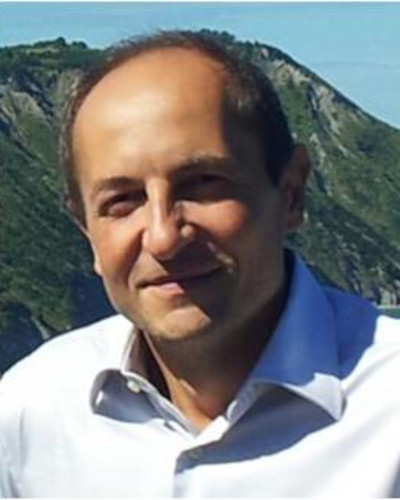
Bruni Andò is a full professor of Measurement Science at the Department of Electric, Electronic, and Information Engineering (DIEEI) of the University of Catania, Italy. He obtained his Master’s degree in Electronic Engineering in 1994 and later earned a Ph.D. in Electrical Engineering in 1999, both from the University of Catania. Following his doctorate, he began his academic career as a researcher in measurement science at DIEEI and was appointed Assistant Professor in 2002. Over the years, his dedication to research and teaching led to his promotion to Associate Professor in 2011 and, after obtaining the Italian National Scientific Habilitation for Full Professorship in both 2013 and 2018, he became a Full Professor in October 2023.
Prof. Andò’s research focuses on smart sensing systems, sensor networks, and advanced signal processing techniques. He has made significant contributions to the development of innovative sensors, including inkjet-printed and flexible devices, biosensors, micro- and nano-sensors, and systems based on novel materials such as ferrofluids and multiferroics. His work also extends to assistive technologies and active and assisted living (AAL) solutions, where he explores sensor-based approaches to improve quality of life. Over the course of his career, he has authored more than 350 peer-reviewed publications, contributed to several international patents, and coordinated numerous national and international research projects.
Beyond his research, Prof. Andò has played a prominent role within the IEEE Instrumentation and Measurement Society (IMS), of which he has been a member since 1997 and a Senior Member since 2013. He has served in various leadership positions, including membership in multiple technical committees, chairing the IEEE SAS Advisory Board, and contributing to the IMS Administrative Committee. His dedication to advancing the field has been recognized through several distinctions, including multiple awards as an Outstanding Reviewer for IEEE journals.
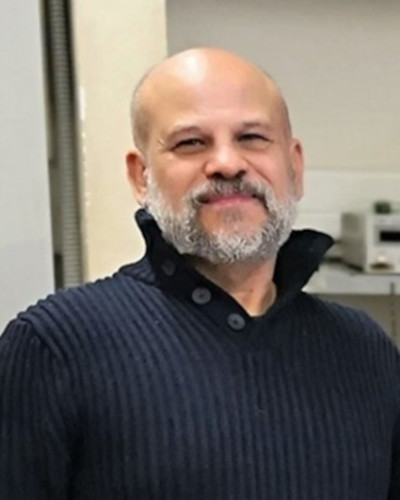
Salvatore Graziani received the M.S. degree in electronic engineering and the Ph.D. degree in electrical engineering from the Università degli Studi di Catania, Italy, in 1990 and 1994, respectively. Since 1990, he has been with the Dipartimento di Ingegneria Elettrica, Elettronica e Informatica, Università di Catania, where he is a Full Professor of Electric and electronic measurement and instrumentation. His primary research interests lie in the field of sensors, polymeric sensors and actuators. He has coauthored several scientific papers and books.
Professor Carlo Trigona received his M.S. in Automation Engineering and Control of Complex Systems (cum laude) in 2006, followed by a Ph.D. in Electronic, Automation, and Control of Complex Systems in 2010 from the same university. His post-doctoral research included positions at University Montpellier in France (2010-2011), University of Catania (2011-2017), and Chemnitz University of Technology in Germany (2017-2018). He then served as an Assistant Professor (2018-2020) and a tenure-track Professor (2020-2023) at DIEEI, University of Catania.
Professor Trigona has received several awards for his research endeavors, notably the 2020 IEEE-I&M Outstanding Young Engineer Award for his exceptional contributions to advancing I&M concepts in sensors and transducers for energy harvesting, and the 2023 IEEE-I&M Best Application Award for his innovative sensors that incorporate the response of plants to a wide range of environmental factors, becoming low, environmentally friendly, biodegradable instruments. 2024 IAAM Scientist Medal.
Currently, he is Director's Delegate of research and President of the Master Degree in Electrical Engineering for Sustainable Green Energy Transition.
Since 2025, he has been a member of the AdCom of the IEEE Sensors Council and a Distinguished Lecturer for the IEEE-I&M Society for 2026-2028, with the lecture topic 'Nature-based and Living Solutions: Evolving from Green to More-than-Green to Advance Sustainable Technologies in Measurement Systems'. Regarding his research profile, he has co-authored more than 350 scientific publications with over 3500 citations. These contributions span chapters in books, papers in international journals, proceedings of international conferences, trademarks, and patents. His research interests encompass sensors, transducers, MEMS, fluxgate magnetometers, energy harvesting, as well as innovative areas such as green and biodegradable sensors and transducers based on living organisms.